A south coast day around a Solheimajokull ice climb
A climb on Sólheimajökull sits halfway along the busiest stretch of the south coast of Iceland. Two waterfalls lie on the road from Reykjavík, and the black sand beaches near Vík are a short drive further east. With a car and an early start, most of it fits into one long day.
The shape of the day
The plan follows Route 1 east from Reykjavík and back again. Two waterfalls come first, the climb fills the middle of the day, and Vík with its beach closes it before the drive home or a night nearby.
The drive alone takes roughly 2–2.5 hours each way to the glacier. The tour runs about 5.5 hours on Arctic Adventures' half day or 4 hours with Tröll Expeditions, and the stops fit around the slot you book.
Pick a start time when you book, then build the rest of the day around it. A later climb gives you the waterfalls first, while an earlier one sends you on to Vík afterwards.
Rough timings for one long day
The table gives rough figures for a self-drive day with the half-day climb. Treat them as a starting point that traffic and weather can stretch.
| Stop | Time to allow | Good to know |
|---|---|---|
| Seljalandsfoss | About 1 hour | Path behind the falls gets wet |
| Skógafoss | About 1 hour | Steps up the side to a viewpoint |
| Arctic Adventures climb | About 5.5 hours | From ~$203, boots with ankle support needed |
| Tröll Expeditions climb | About 4 hours | From ~$229, climbing boots included |
| Vík and Reynisfjara | 1–2 hours | Stay well back from the waves |
Add the drive both ways and a meal, and the day easily runs past twelve hours. That is why a night near Vík, or one waterfall instead of two, often makes the plan more pleasant.
Seljalandsfoss, the waterfall you walk behind
The first stop for most people heading east is Seljalandsfoss, right beside Route 1. A path runs behind the falling water and round the back of the pool, which is the reason people stop here.
Spray soaks that path until it is wet and slippery. Wear a waterproof jacket and shoes with grip, and allow roughly an hour including the walk from the car.
Skógafoss and the steps beside it
Further east, Skógafoss drops off an old sea cliff in one wide curtain of water. You can stand near its base in the spray, or climb the long flight of steps up the side to a viewpoint above the falls.
Skógafoss lies about 10 km (6 miles) west of the glacier turn-off, so it is the last stop before the ice. If you plan to climb, you may prefer to skip the steps and keep your legs fresh for crampons.
The climb at Sólheimajökull
From Skógafoss the turn onto road 221 comes quickly, and a short drive inland ends at the glacier car park. Arctic Adventures meets at its yellow bus there, and our driving guide covers the route and the parking.
After a safety briefing and the gear fitting, Arctic's group hikes up a moss-covered valley to reach the glacier from above. Then comes the walk across the ice and an optional ice climbing intro on a natural wall.
What you see up there depends on the day, since the guide picks the route and the climbing spot. Our beginner's guide to the climb explains how a first go on the rope feels.
The climb that anchors the day
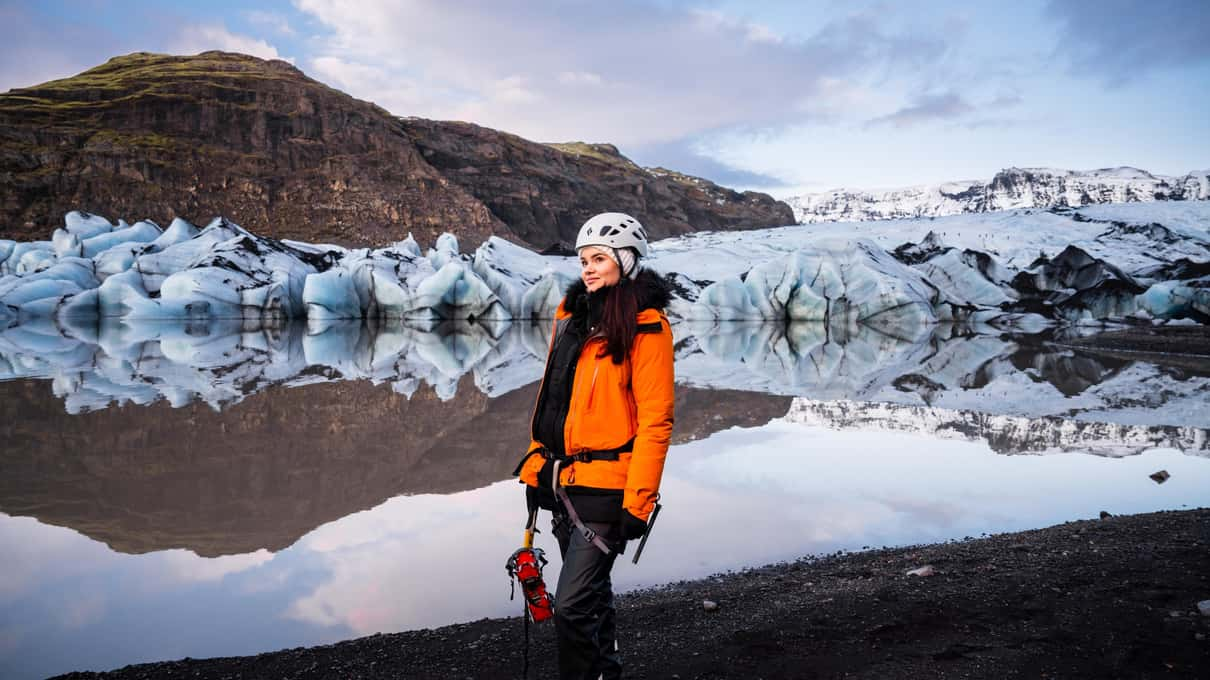
Arctic Adventures' half day meets at the glacier car park and leaves room for both waterfalls on the way. Boots with ankle support are mandatory (rental costs a small fee), and food is not included.
If you take the bus from Reykjavík
Arctic's full-day option from Reykjavík takes about 13 hours and already includes stops at Seljalandsfoss and Skógafoss. That covers the western half of this plan without a hire car, though the timetable is the operator's rather than yours.
The Reykjavík option costs more than the half day from ~$203, so check the listing for its price. Our bus or car guide compares the two ways of reaching the glacier.
Tröll Expeditions has no transport, so its tour only fits a self-drive day. Our side-by-side comparison helps if you are still choosing between the two operators.
Vík and the black sand beach
Carry on east along Route 1 for roughly 25–30 km (16–19 miles) and you reach Vík. It is a small village and a natural place for a late meal after a day on the Solheimajokull ice.
Just west of the village, Reynisfjara is the black sand beach with basalt columns and sea stacks offshore. It is beautiful and it is dangerous, because sneaker waves run far up the sand without warning and have dragged visitors into the sea.
Stay well back from the water at Reynisfjara, even when the sea looks calm, and never turn your back on the waves. Keep children close and off the wet sand.
Drive back or stay the night
Vík is further from Reykjavík than the glacier, so the drive home from the beach is longer still. After a climb and a full day outside, that last stretch in the dark is the part people tend to regret.
A night near Vík turns the rush into a relaxed loop, with the beach in the evening light and the waterfalls on the way back the next morning. Our guide to the glacier year shows how much daylight each season gives you.
In winter, daylight drops to about 4–5 hours around midwinter, which rules out most of this plan in one go. Choose one or two stops besides the climb, then check our page on weather cancellations before you set off.