Dressing for a day on the ice at Solheimajokull
The guides bring the technical gear, from crampons to the rope, so your job is the clothing. Get the boots and gloves right and the rest is ordinary layering for a cold, wet day outdoors in Iceland.
What the guides hand you
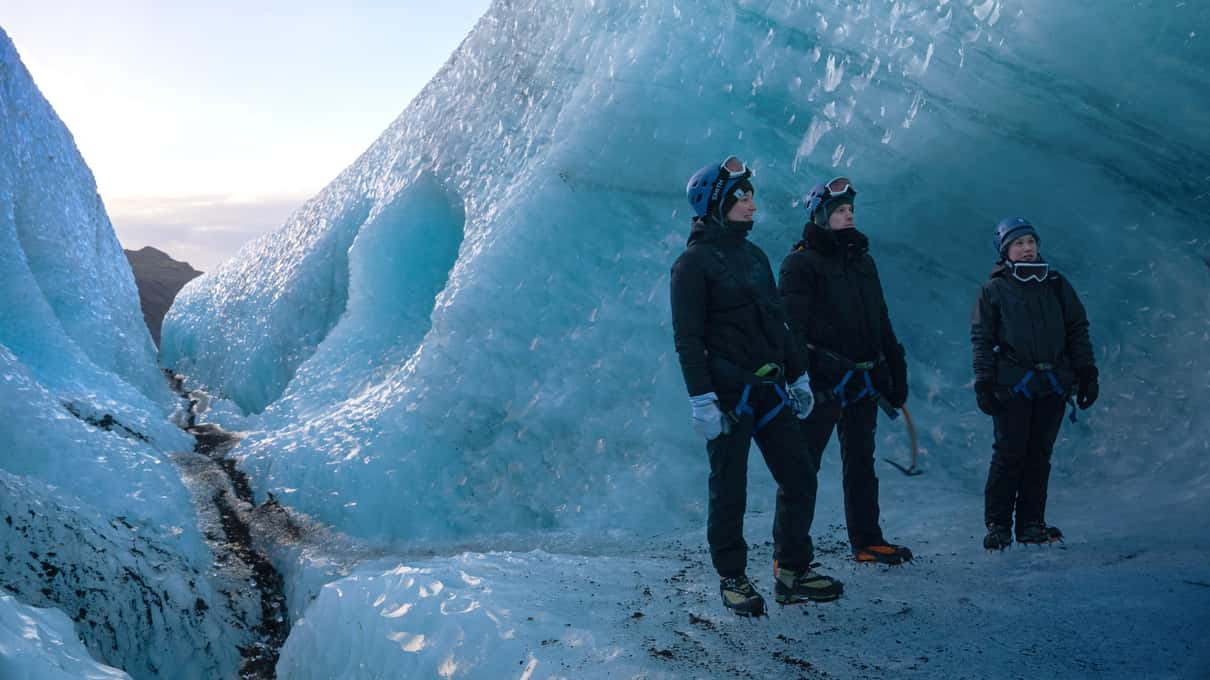
Both tours include the glacier equipment, and the guide fits it before you step onto the ice. That means crampons and a helmet as well as a harness and an ice axe, with ropes for the climb.
You do not need to buy or rent any of that. What you bring is clothing for several hours outside in wind and wet, plus footwear that crampons can be fitted to.
Boots come first
Footwear is where the two tours differ most. Tröll Expeditions' climb from ~$229 includes climbing boots, so you can arrive in your own hiking shoes and leave the heavy footwear to them.
Arctic Adventures makes sturdy hiking boots with ankle support mandatory. If you have none, you can rent a pair for a small fee, so sort it out when you book rather than turning up in sneakers.
Arctic's listing also rules out high heels and open-toed shoes, which sounds obvious until someone tries a glacier in fashion boots. Soft running shoes are a poor choice too, since they soak through quickly in slush and give your ankles no support.
Layers from the skin out
Dress as if for a cold, wet hike, because that is what most of the day is. The walk to the ice warms you up, then standing at the climbing wall cools you down fast.
- A base layer of wool or synthetic fabric, not cotton
- A warm mid layer such as a fleece or a light down jacket
- A waterproof jacket with a hood, because the south coast gets plenty of rain and spray
- Waterproof pants, which Arctic asks for by name and Tröll covers under rain gear
- Warm socks, plus a dry pair waiting in the car
Skip jeans. Wet denim stays cold and heavy for hours, and it stiffens your knees just when you need them to bend on the ice.
If you will climb, avoid bulky outer layers that get in the way of a harness. The harness goes on over your clothes, so a slim waterproof shell works better than a thick parka.
Gloves and a hat, plus sunglasses
Tröll's listing calls gloves necessary to protect your hands, and it is right. Gripping an ice axe and touching wet ice soaks thin gloves in minutes, so bring a spare pair and keep it dry in your bag.
Waterproof ski gloves suit the walk, while thinner gloves give a better grip on the axe. Some people carry both and swap at the wall, which also gives cold fingers a second chance.
Wear a thin hat that fits under a helmet, since the guide will hand you one before the ice. A neck gaiter helps when the wind comes down off the ice cap of Mýrdalsjökull.
Sunglasses matter more than people expect. Glare off the ice can be harsh even on a grey day, and in the low winter sun it hits you straight at eye level.
A small backpack with water and a snack
Food and drinks are not included on Arctic Adventures' tour, and Tröll covers coffee and chocolates rather than a meal. Pack water and a snack in a small backpack you can carry while walking on crampons.
Keep the bag light, with room for the spare gloves and a layer you take off on the walk up. Leave big camera bags in the car, since your hands are busy and the ice is uneven.
Your phone will do for photos, but cold drains batteries fast in winter. Carry it in an inside pocket and bring a small power bank for the drive home.
Summer and winter kits differ
Summer days near Vík top out at around 11–14 °C (52–57 °F), so rain is more of a problem than cold. Waterproofs matter most, and you may walk in only a base layer under your shell.
In winter, highs hover roughly at 0–3 °C (32–37 °F), and wind on the glacier makes it feel colder. Add a thicker mid layer and heavier gloves, and read the best time to climb for what else changes with the season.
Whatever the month, check the forecast the evening before. If it looks wild, our cancellation page explains how a called-off day is handled.
Gear as a reason to pick a tour
Choosing between the two tours partly on gear is reasonable. If you own no hiking boots, Tröll's included climbing boots save a rental, while Arctic's longer day suits people who already have good boots and want more walking.
Climbing boots included, six on the rope
Tröll Expeditions lends climbing boots with the rest of the glacier kit, from crampons to ropes. Bring warm rain gear and gloves, and meet at its base by the glacier car park.
Still weighing the activity itself? Our page on ice climbing or a glacier hike sets the two side by side, and how hard the climb is covers the fitness side.
For the drive, see driving to the glacier, and for the full bill with boot rental and lunch, the cost guide. Arctic Adventures from ~$203 also offers a bus from Reykjavík if you would rather not drive to a Solheimajokull ice climbing tour.