The best time to book a Solheimajokull ice climbing tour
Both tours on this site run through the year, weather permitting, so there is no closed season to dodge. What changes is the light and the ice underfoot, plus the drive. Below, how the glacier year plays out and when we would book.
A glacier that never closes
Ice climbing on Sólheimajökull is not tied to a season the way puffin watching is. Arctic Adventures and Tröll Expeditions both run through the year, and the weather, not the calendar, decides whether a given day goes ahead.
So the best time depends less on when the glacier opens and more on what you want from the day. Long light and mild air point to summer. Firmer ice and a calmer car park point to winter.
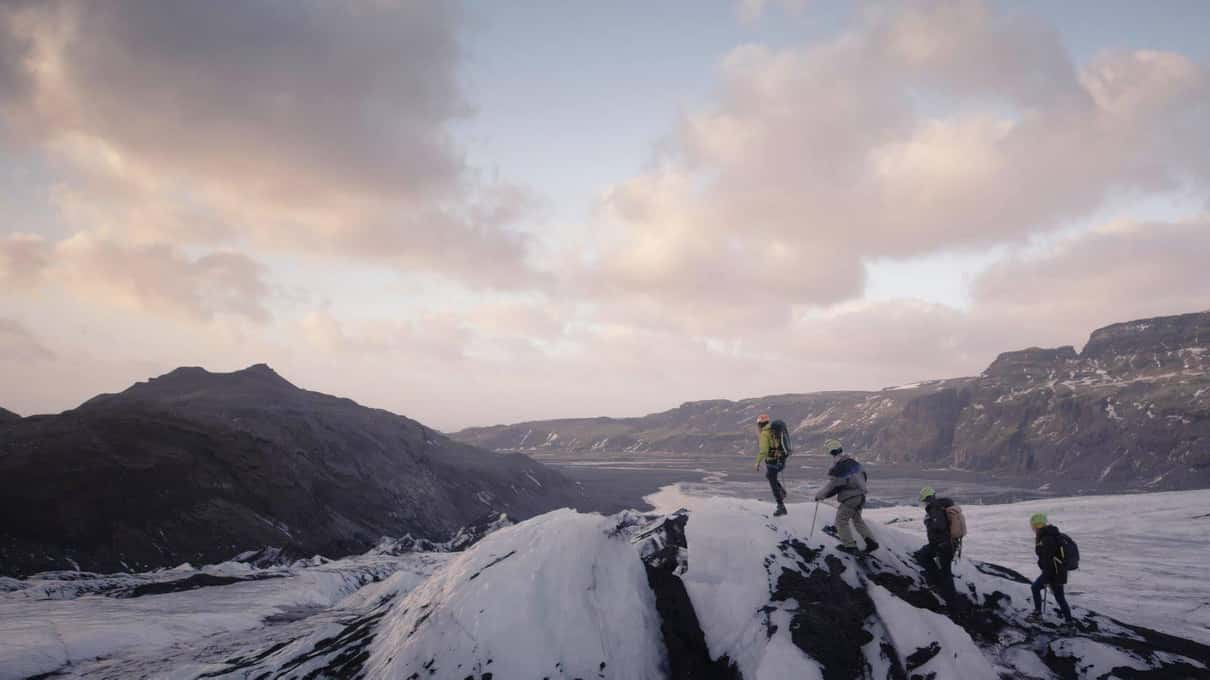
Summer, from June to August
Around midsummer south Iceland gets about 20 or more hours of daylight, so you never race the dark. Highs near Vík sit roughly at 11–14 °C (52–57 °F), which feels mild on the walk in and cool once you stop at the wall.
The surface ice is softer and wetter in summer, and meltwater runs in channels across it. Ash from past eruptions shows through as grey and black streaks, so the glacier looks at its greyest, less like the blue of the photos.
Summer is also the busiest time at the car park, when coaches arrive alongside self-drivers all day. Book a few weeks ahead if your dates are fixed, since small groups of six or eight fill first.
Long days also make summer the easiest season to combine the climb with other stops. With light until late evening, you can see both waterfalls and still reach the black sand near Vík without watching the clock.
Winter, from November to March
Around midwinter daylight shrinks to about 4–5 hours, and the sun stays low over the ice cap. Highs near Vík hover roughly at 0–3 °C (32–37 °F), and the wind makes it feel colder on the open glacier.
The upside is the ice itself, which tends to be harder and bluer once the surface melt stops. Crampons bite cleanly, and the walls guides use for climbing often look the way people picture them.
The downside is the road and the weather. Route 1 can be icy and windy for the roughly 160 km (100 miles) from Reykjavík, and storms cancel more tours in these months than in summer.
If winter driving worries you, Arctic Adventures' Reykjavík option puts someone else at the wheel for a 13-hour day. Our page on the bus from Reykjavík or the drive weighs the two.
The shoulder months
Spring (April and May) and autumn (September and October) sit between the two extremes. Daylight is long enough for a relaxed day, and the car park is calmer than in July. Roads are usually clear of snow, though a storm in spring or autumn can still close a day.
For a first ice climb these are the months we would aim for. You get a fair chance of firm ice without the shortest days, and a spare day in your plan covers you if the weather turns.
Autumn has one extra draw for people staying the night near Vík. Once the evenings get dark again, a clear sky after the climb can bring the northern lights, though that is a bonus to hope for and never part of either tour.
The glacier year at a glance
| Season | Daylight | Highs near Vík | On the ice | The drive |
|---|---|---|---|---|
| Summer (June to August) | About 20+ hours around midsummer | Roughly 11–14 °C (52–57 °F) | Softer, wetter, grey with ash | Busiest, roads clear |
| Winter (November to March) | About 4–5 hours around midwinter | Roughly 0–3 °C (32–37 °F) | Harder, often bluer | Ice and wind on Route 1, more cancellations |
| Shoulder (April, May, September, October) | In between, changing fast | Between the two | Mixed, varies by week | Usually clear, some storms |
These are rough patterns, not promises. The ice changes from week to week, and the guide picks the route and the climbing spot on the day, whatever the month says.
Morning or afternoon on the ice
Pick a start time when you book, since neither listing fixes one on the page we read. Morning slots are often quieter on the glacier, before most day-trippers from Reykjavík have arrived.
In winter an early slot also leaves more of the short daylight for the drive home. In summer the hour matters less, so fit the climb around the waterfalls and the rest of the south coast.
When we would book, and what
For most first-timers we would pick a shoulder month and a morning slot on Arctic Adventures' hike and climb from ~$203. It scores 4.8 from 400+ reviews on GetYourGuide, and the climbing is optional if someone in your group would rather walk.
A shoulder-month morning on the ice
Arctic Adventures meets at its yellow bus in the glacier car park for the half day, or collects you in Reykjavík for the full day. Free cancellation up to 24 hours before gives you room if the forecast turns.
Want a group of six at most instead? Tröll Expeditions from ~$229 runs in the same months, and our comparison of the two operators sets out where they differ.
Whatever the month, book early in your trip rather than on your last free day. If the weather cancels, operators usually offer a refund or a new date, and our page on when the weather calls it off explains what happens next.
Unsure whether you want the rope at all? Weigh ice climbing against a glacier hike first. Then sort out your layers, because what you wear on the ice matters more in winter than the date you choose.